

Digital assets: from expectations to institutional adoption
Over the past few months, I have had the opportunity to speak with various players in the financial industry—including banks, asset management firms, investment funds, and service providers—about the custody, execution, and tokenization of digital assets.
These conversations have given me a better understanding of where the market currently stands. There is clear interest and a fairly widespread view that digital assets will form part of the financial infrastructure of the future. However, there is still caution around when to invest, which model to adopt and what the return will be.
From my perspective as an independent director, this caution is understandable. Financial innovation cannot be assessed solely from a technological standpoint. It must also be considered from the perspectives of the business model, regulation, risk management and corporate governance.
From technological potential to the business case
One of the conversations that best illustrates this situation concerned the potential tokenisation of part of a fund. The project was technically feasible and its potential advantages were well understood: greater traceability, automation, new distribution possibilities and potential efficiencies.
The challenge arose when analyzing its implementation. If incorporating the new infrastructure required retaining, at least initially, a significant portion of the traditional model, the project could end up adding costs and complexity before generating efficiencies.
This experience reinforced one conclusion: tokenisation should not be an objective in itself. Its value will emerge when it enables better distribution, access to new investors, reduced friction or process automation. The technological ability to tokenise an asset does not, in itself, constitute a business case.
At the same time, it would be a mistake to think that the traditional model will remain unchanged. Regulation and infrastructure are also evolving. MiCA has established a harmonized European framework for certain cryptoassets and related services. In Luxembourg, legislative developments regarding DLT have introduced roles such as the Control Agent, allowing for a different organization of certain functions related to the issuance of dematerialized securities.
This does not mean that the traditional model will disappear. The key point is that certain functions may begin to be carried out in a different way. The CSSF itself has noted the development of advanced projects to issue fund shares and other financial instruments natively on the blockchain.
Governance and institutional adoption
From the perspective of an independent director, this transformation has another fundamental dimension. Incorporating digital assets, selecting a custodian or developing a tokenised product are not exclusively technological or commercial decisions. They are also governance and risk management decisions.
Governing bodies must understand the operating model, technological risks, dependency on service providers, control mechanisms and the responsibilities of the various participants. It is significant that regulation is also moving in this direction: MiCA introduces organisational requirements for regulated providers, while Luxembourg’s Control Agent framework includes requirements relating to internal governance, risk management, controls and information security.
The caution I have observed around tokenisation is also evident in my conversations with financial institutions about custody and execution. Institutions are monitoring regulation, assessing client demand and watching the moves made by other market participants. They do not want to be late, but nor do they necessarily want to bear the cost and risk of being first movers.

My feeling is that we are in a phase of active waiting. However, the conversations have changed. The debate no longer revolves so much around understanding blockchain or determining whether digital assets have a future. Now the talk is about integration, custody, regulation, costs, risks, and return on investment.
I find this shift particularly significant. We have moved from trying to understand the technology to trying to build the business and governance model that will enable it to be used.
After these months of speaking with different stakeholders, I do not expect traditional financial infrastructure to be immediately replaced by a fully digital model. A gradual transition is more likely, with both models coexisting and adoption progressing wherever there is a clear benefit.
As an independent director, I believe that finding the right balance will be essential. Caution should not be confused with inertia, just as innovation does not mean taking on risks that are not understood.
Digital assets are ceasing to be exclusively a technological issue. They are increasingly a matter of strategy, regulation, governance and business model. Once these dimensions are fully aligned, we will probably see a genuine acceleration in institutional adoption.
Authors
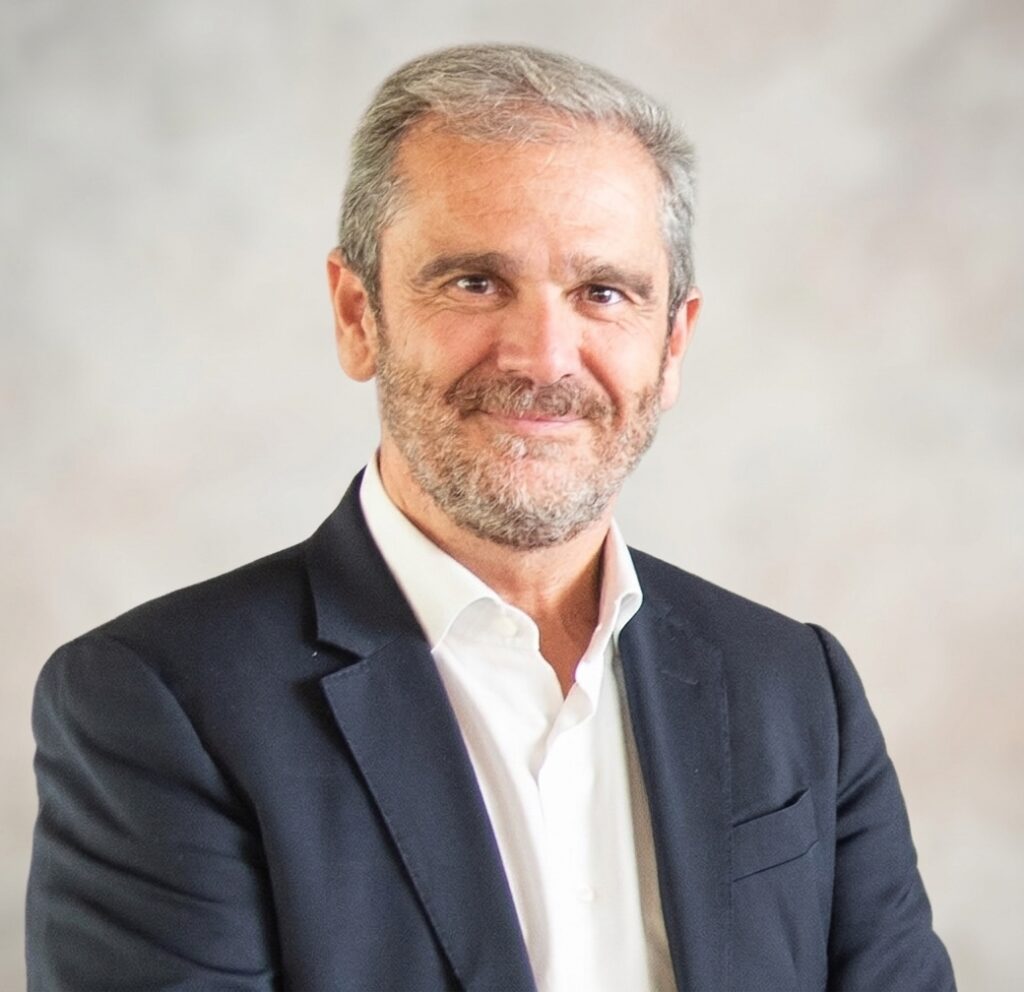
Álvaro Laorden
Independent Director and Board Member of the Official Spanish Chamber of Commerce in Belgium and Luxembourg
Search posts by topic
Advisory (7)
AI (6)
Alternative Investment (25)
Alternative investments (3)
AML (1)
Art (1)
Asset Management (30)
Banking (17)
Capital Markets (1)
Compliance (1)
Crypto-assets (3)
custody services (1)
depositary services (1)
Digital Assets (4)
Digital banking (7)
Diversity (9)
EU (6)
Family Businesses (4)
Family Offices (2)
Fintech (10)
Fund distribution (31)
Governance (12)
HR (9)
ICT (1)
Independent Director (9)
Insurance (3)
Internationalization (1)
LATAM (9)
Legal (12)
Private Equity (5)
Real Estate (2)
Regulación (1)
Regulation (7)
Reinsurance (2)
RRHH (1)
Stock Market (1)
Sustainable Finance (23)
Tax (19)
Technology (6)
Transfer Pricing (3)
Trends (29)
Unit-linked life insurance (6)
Wealth Management (13)