

From Fund Administrator to AI-Native Orchestrator

Organizing financial institutions in Luxembourg around knowledge for better compliance and risk management
A compliance officer at a Luxembourg fund administrator opens a query from the CSSF. She’s seen this question before, eight months ago, for a different fund, a different file, but the reasoning that got that earlier case through review lives in an email thread, a colleague’s notes, someone’s memory. She starts from zero.
Down the hall, an onboarding team is running enhanced due diligence on a new investor whose ownership structure loops through three jurisdictions. The pattern is familiar: the firm cleared something similar last year. But nobody can say which file, or which questions actually satisfied the reviewer.
This is not a story about AI replacing anyone. It is a story about where the real asset of a financial institution actually sits, and why most firms are currently letting it evaporate.
What “AI-native Internal Control Functions (or Organization)” actually means
Call the alternative “AI-native”.
For a financial institution, it means designing operations so that AI is part of how decisions get made and knowledge gets reused, not a tool layered on top of a process that stays otherwise unchanged.
The term gets used loosely, though, so it is worth a precise test: if you removed the AI from a process, would the outcome change?
- If the answer is “not much,” the firm has simply added a tool.
- If the answer is “the work would slow, or the quality would drift,” something more structural has happened.
For a fund administrator, becoming AI-native does not mean adopting a chatbot. It means reorganizing the institution so that its accumulated knowledge, every AML judgment call, every regulator interaction, every exception and how it was resolved, becomes a living, queryable asset instead of a set of memories scattered across inboxes.
The fund administrator’s role shifts from executing process to orchestrating that knowledge: deciding what gets captured, how it is reused, and who remains accountable for the outcome.
In practice, AI native in financial institutions this looks less dramatic than the term suggests.
- A firm-wide layer holds precedent: how past regulatory questions were resolved, and why.
- A client-level layer holds context that grows with every interaction, so a new analyst inherits the relationship’s history rather than reconstructing it.
- A matter-level layer handles the task in front of someone, informed by both. The due diligence case that once took days because someone had to remember, or ask around, or re-research from scratch now takes hours. Not because a machine replaced judgment, but because the judgment already made last time is available this time.
Financial institutions may think “we are already doing this today”. It is not the case. Because what’s important is to keep the context clean, consistent and compliant to the latest regulatory updates, in near real-time.

The Luxembourg case is about focusing on consistency and risk mitigation instead of speed
That reframing matters more in Luxembourg than almost anywhere else, because the case for AI-native here should not be speed. It should be consistent. A financial centre built on trust and regulatory credibility does not win by being the fastest mover; it wins by being the most reliably correct one, at scale.
An orchestrated knowledge layer means a case gets handled the way the institution has decided it should be handled, not however the person on duty that day happens to remember it. That is
- a stronger answer to a supervisor’s question than “we followed the checklist.”
- a form of regulatory readiness: as AI systems increasingly touch credit decisions, AML screening, and investment recommendations, institutions able to show how a judgment was reached, and that it was reached consistently, will have an easier time under scrutiny than those that cannot.
“A financial centre built on trust and regulatory credibility does not win by being the fastest mover; it wins by being the most reliably correct one, at scale.”
The honest caveat
None of this is free, and a fair account has to say so. If AI increasingly handles the groundwork that used to train junior staff (the first-pass research, the document review, the pattern-spotting), firms need a real answer for how the next generation of senior judgment gets built. That is a genuine open question, not a marketing footnote.
The firms taking this seriously are not avoiding the question; they are redesigning around it. If the reasoning behind every past decision is captured rather than lost, junior staff can be put to work reviewing and testing that reasoning against new cases much earlier, instead of spending years accumulating it one file at a time. Judgment still has to be built. It just gets built by scrutinizing decisions, not by re-deriving them from scratch.
And not every institution that calls itself “AI-native” has actually restructured anything; plenty have added a tool to an unchanged process and adopted the label anyway. The test above exists precisely to tell the difference.
What doesn’t change is the fundamental resource.
Luxembourg’s financial institutions have always competed on trust, and trust has always been built from accumulated judgment: knowing how a particular structure was cleared, why a particular counterparty was flagged, what a particular regulator tends to ask.
The institutions that organize that knowledge deliberately, rather than leaving it in people’s heads and inboxes, will be the ones AI actually strengthens. The ones that don’t will find AI simply speeds up an inconsistent process: faster answers, same underlying risk.
The question worth asking inside any Luxembourg institution is not whether to adopt AI in 2026, but whether there is a proven, gated, and risk-controlled roadmap covering 2026 to 2030 to evolve from a reactive organization to a proactive one, structured around an updated and consistent knowledge baseline.
And it is along this evolution where we help our customers.
Authors
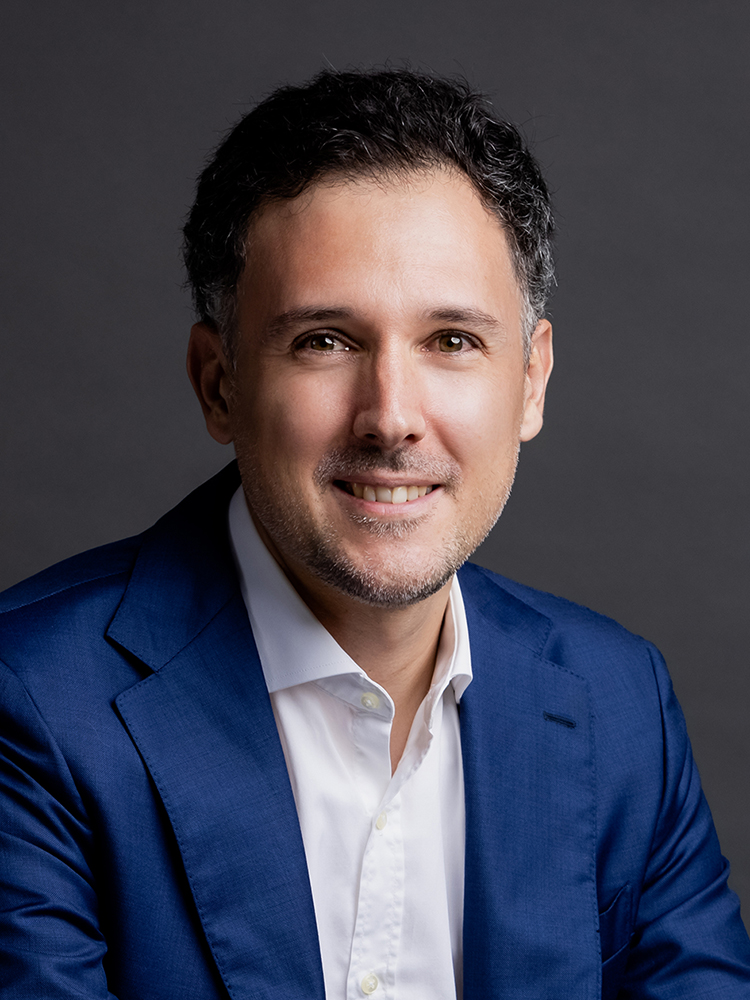
Borja Gómez
Market Strategist
Aptus.AI
Search posts by topic
Advisory (7)
AI (6)
Alternative Investment (25)
Alternative investments (3)
AML (1)
Art (1)
Asset Management (30)
Banking (17)
Capital Markets (1)
Compliance (1)
Crypto-assets (3)
custody services (1)
depositary services (1)
Digital Assets (4)
Digital banking (7)
Diversity (9)
EU (6)
Family Businesses (4)
Family Offices (2)
Fintech (10)
Fund distribution (31)
Governance (12)
HR (9)
ICT (1)
Independent Director (9)
Insurance (3)
Internationalization (1)
LATAM (9)
Legal (12)
Private Equity (5)
Real Estate (2)
Regulación (1)
Regulation (7)
Reinsurance (2)
RRHH (1)
Stock Market (1)
Sustainable Finance (23)
Tax (19)
Technology (6)
Transfer Pricing (3)
Trends (29)
Unit-linked life insurance (6)
Wealth Management (13)